Teaching during a Pandemic
We being told to be prepared to change our teaching from face to face, to a "distance education" model.
Notice it is not online education. Why? Because as a public school, we can not go 100% online. In short, as usual, we are being set up to achieve an impossible task. What do I mean?
This is what I mean. I completed a survey of my students who have access to the internet and over 15% do not have any access to the internet or no access to any kind of computing device other than a cellphone. Let me put it another way, 85% of my students could complete the year using online education. As a public education teacher, I fight for equality for my students. So we see the digital divide becoming an issue. This is why we need to create "distance education" opportunities for all students. But "distance education" is not equitable either.
WHY CAN'T WE USE BOTH AT THE SAME TIME
We are being told to create online resources AND to create offline (paper resources) for those who can not gain access to the internet. Again, here is the issue of equality. Allow me to illustrate: Say I give an assignment online, and create s short video for the students to view as it relates to a new assignment. The video is only seven or eight minutes long. Then for the offline kids, I write a one or two-page instruction guide, containing the same information as the video. For some eighth graders, reading two pages (or even one page) of text, especially instructions, can overwhelm them. Some students will not read even attempt to read the instructions, some might try, and then give up. In short, the students who have access to the video will have an easier time gaining the information, when compared to the students who need to read the assignment.
INTERNET INFRASTRUCTURE
Not all homes only have one student. Some homes have three or four siblings that will be working from home. Are there enough computing devices for all students? Again, this is an issue for some of my students. Additionally, is there enough physical space for all students to work? What about bandwidth? Even if all the students have a computing device, and a place to work such as a desk, now all three or four of students are streaming videos or taking an online quiz., not to mention if their parents are working from home. Now multiply that times how many other families are doing the same in the school district. In short, online infrastructure needs to be taking into consideration.
I know teachers will try their best to help their students, we always do. But I am concerned that we are given an impossible task, with limited resources( as usual). And some members of the public will use this as an example of how public education is failing. I hope not.
Store Link

Friday, April 3, 2020


Monday, March 30, 2020
Teaching During the Pandemic - March 30

School is closed, but we are given the mandate to continue teaching and contacting students.
Each state has different expectations and guidance for their teachers. In Oregon the expectations for teaching during the Pandemic area as follows.
- Teachers can not give assignments to students during this period. Instead, teachers can only give supplemental material. The supplemental material can NOT be new information, and there is no assessment of the supplemental material. Why? Because the issue is equity. If teachers were to give assignments for a grade, how might we know that students have all the support they need to be successful? Yes, this might be mean some students will not complete the work, and there will be no accountability for the student.
- Teachers might be called into their building to assists with other duties such as child care for first responders or helping with food distribution. Schools will continue with their school lunch programs during this time. This is critical for some students, as school might be the only place where they receive a healthy meal.
- As of now, teachers must deliver the supplemental material in the form of hard copies. Again, this is an issue of equity. Some students may not have a computing device, or others may not have access to the internet.
Today, I had a Zoom meeting with my principal and our first step will be to contact our advisory students and their families. Check on them, make sure they are okay, answer any questions they might have.
Later, we will formulate a plan about getting the material out to the kids.
Thursday, March 26, 2020
Self quarantined March 26 - Okay, this is getting old
OKAY, THIS IS GETTING OLD
 But like my days running long-distance track, I am in the second stage. I need to focus on myself (and my family). Do not focus on the distractions of the pain, but take it to step by step. In this case, it is day by day. Also, having the person (or people) to help you break the wind. Or maybe I am the one who is breaking the wind for them. To help them get through the race and, in this case, the self-quarantine.
I think back to when I was in long-distance track in high school. I ran the one mile and two miles events (Yes, this was a premetric time). The strategy of these long-distance races is broken down into three parts; 1) A short sprint out of the pack and get your position. 2) Hold that position, get behind a person so they "break the wind" for you, and only pass that person if they slow your pace. 3) And the last is the all-out sprint to the en; this was usually the remaining 150 - 100 yards of the race.
But the most challenging part of the race was holding your position. You had to focus on your pace. Sometime I would keep a song running in my head that would help me keep a rhythm and distract me from any physical pain. Also, I could not get distracted with other races passing me. It too easy to start sprinting in the middle leg to keep up with the other runner...If I did that, then I had no energy for the sprint at the end. So, I stayed focused on myself and my pace.
Additionally, I needed a person to help me out. This person was the runner in front of me who broke the wind. You had to be close enough to get into their draft - believe it or not, this helped. In long-distance running pacing, finding a person to help you, and setting your pace so you can finish the race were essential strategies.
This is where I am at in the self quarantined. The novelty has worn off. Yes, the time off is nice, and I enjoy my family. But the number of deaths reported in the news is becoming disheartening (69,000 confirmed cases and 1,050 have died in the US), the economy is tanking - the latest report is nearly 3 million unemployed, and there is a reported Conorvirus case in our small town of Canby.
Then, there are my students. Yes, believe it or not, I find my thoughts going to them more and more. For some of my students, I know school is a better place for them than their home. A public school is a place where they have structure, where they meet positive adults, and for some, the only place to receive a good meal.
 But like my days running long-distance track, I am in the second stage. I need to focus on myself (and my family). Do not focus on the distractions of the pain, but take it to step by step. In this case, it is day by day. Also, having the person (or people) to help you break the wind. Or maybe I am the one who is breaking the wind for them. To help them get through the race and, in this case, the self-quarantine.
WE STOPPED AT McDONALD'S
The other day, my son, who used to work at a local McDonald's, needed to pick up his check. I agreed to go with him. Yes, I am an over-protective Dad. As we waited in the lobby, this is how it looked. - see photo. Note the yellow chain in the corner of the picture. Yes, the entire setting area is chained off. By the way, our sone wasn't fired or laid off. Parents orders. Since his job required him to work the drive-through and to take people's money, we figured his likely exposer with an infected person would increase since he was working the drive-through AND taking people's money. Additionally, since it's McDonald's, he would be exposed to people traveling through town. So we thought it wise to keep him home. Better safe than sorry. Understandably he thought we were overreacting.
Monday, March 23, 2020
Self quarantined March 23
This past week, my family and I have taken advantage of the glorious Oregon sunshine and completed our fence on the front side of our property.
But, as the old saying goes, all good things must come to an end....and the Orgeon sunshine has turned to the Oregon rain. And it looks like it will be with us for a few days. This being the case, I have saved some indoor projects/activities up for this occasion.
But, as the old saying goes, all good things must come to an end....and the Orgeon sunshine has turned to the Oregon rain. And it looks like it will be with us for a few days. This being the case, I have saved some indoor projects/activities up for this occasion.
- Rearrange our office.
- Clean up the garage
- Watch some Netflix - Yes, I have deliberately stayed away from the television because I wanted to work outside in the sunshine.
- Read - I have been reading, but only an hour or so...Now it is time to go full tilt!
- Visit some of the virtual tour sites of museums on line.
Also. it is expected that Governor Brown will issue a "Stay at home" order. Not a big deal for us, as we've been doing this. Only going out for food, and to go out with my son to get his check from McDonald's.
I have to tell you it was strange to walk into McDonald's and seeing the lobby roped off with signs stating it was off-limits. There was only a skeleton crew working, but they were busy. Not sure why people still would want to eat out? All it takes is one sick work to spread the virus to hundreds.
Finally, the family seems to be holding up fine. Myles, our son, has taken to baking cakes. He has already made two cakes. Not sure why, but I don't care. He seems to enjoy it, and cooking is a positive outlet. But then just sitting away and doing nothing. Sherie is staying busy too. She has her online class keeping her busy, And she has worked outside with me side by side. We are fortunate to own property. If we get cabin fever, our nearly five acres is like our own private park. We have ducks, the wild birds, and our chickens to visit. I feel for those people who live in a large city with only an apartment with nowhere to go...stuck inside.
In short, I feel very fortunate. We have food, no issues with finances, a place to wander outside, and everybody is healthy (I just knock on my wooden table after I typed this).
I just know that in a few weeks, this will all be over, and we can return to our normal routines.
Friday, March 20, 2020
Self quarantined March 20
TP Hunting!
I woke up early to be one of the first in line as the local grocery store opened at seven in the morning. When I arrive at 6:45 there was already about a half of dozen people waiting. By the time the doors open there were about 25 people waiting to get into the store. Everybody waited patiently, but you could feel everybody's anticipation, for the moment when the clerk unlocks the door and we step through. One man said this morning was his fifth time arriving early, all for the quest of toilet paper. He hoped this time he would strike gold! I hope to be lucky too.
Once the doors open, everybody, including me, walked briskly to the toilet paper aisle in hopes of finding the heavily soft paper found only in rolls...and there it was. The top and bottom shelves were stocked with the MEGA pack of 24 rolls of toilet paper. Even though several signs were in plain sight about rationed paper products to one per customer, a few people ignored the signs and hoarded two or three packages and stacked them in their grocery cart. I quickly grabbed my one allotted MEGA pack and then swiftly moved down to the pasta aisle. And again, I scored 3 pounds of pasta and two boxes of Mac and Cheese...The Grocery Gods favor me this morning.
Then, just by chance, I walked by the toilet paper aisle again and saw it was already cleaned out in only a few minutes. No more toilet paper. The Grocery Gods smile only upon those who arrive early.
The remainder of the day, we worked in the yard, trimmed the trees, and repaired a fence. The day was beautiful, blue skies with the temperature in the mid-60s. The work on the property helps everybody in the family from thinking about the pandemic.
New News
We heard the governor of Illinois order all citizens to stay in their homes. We think Governor Brown will issue a similar order within three days. So, I return to the store and stocked up with some last-minute groceries.
Our Trip This Summer
We video chatted with our friends from Australia tonight. We do this once a month because they are fun people, and we've been working on coordinating a Summer road trip covering the Southeastern part of the US. But the pandemic has thrown our plans for a loop. Currently, the Austrian government has banned traveling from Auzzieland. We hope for the best, thinking by the end of May, the pandemic will have died out or is under control. Then we can travel as planned. If not, plan B would require us to move all the planned stops to next summer.
I woke up early to be one of the first in line as the local grocery store opened at seven in the morning. When I arrive at 6:45 there was already about a half of dozen people waiting. By the time the doors open there were about 25 people waiting to get into the store. Everybody waited patiently, but you could feel everybody's anticipation, for the moment when the clerk unlocks the door and we step through. One man said this morning was his fifth time arriving early, all for the quest of toilet paper. He hoped this time he would strike gold! I hope to be lucky too.
Once the doors open, everybody, including me, walked briskly to the toilet paper aisle in hopes of finding the heavily soft paper found only in rolls...and there it was. The top and bottom shelves were stocked with the MEGA pack of 24 rolls of toilet paper. Even though several signs were in plain sight about rationed paper products to one per customer, a few people ignored the signs and hoarded two or three packages and stacked them in their grocery cart. I quickly grabbed my one allotted MEGA pack and then swiftly moved down to the pasta aisle. And again, I scored 3 pounds of pasta and two boxes of Mac and Cheese...The Grocery Gods favor me this morning.
Then, just by chance, I walked by the toilet paper aisle again and saw it was already cleaned out in only a few minutes. No more toilet paper. The Grocery Gods smile only upon those who arrive early.
The remainder of the day, we worked in the yard, trimmed the trees, and repaired a fence. The day was beautiful, blue skies with the temperature in the mid-60s. The work on the property helps everybody in the family from thinking about the pandemic.
New News
We heard the governor of Illinois order all citizens to stay in their homes. We think Governor Brown will issue a similar order within three days. So, I return to the store and stocked up with some last-minute groceries.
Our Trip This Summer
We video chatted with our friends from Australia tonight. We do this once a month because they are fun people, and we've been working on coordinating a Summer road trip covering the Southeastern part of the US. But the pandemic has thrown our plans for a loop. Currently, the Austrian government has banned traveling from Auzzieland. We hope for the best, thinking by the end of May, the pandemic will have died out or is under control. Then we can travel as planned. If not, plan B would require us to move all the planned stops to next summer.
Thursday, March 19, 2020
Self Quarantined - March 19th
As a student of history, I understand the power of primary sources and how these resources help people better understand the past.
This being the case, I will make an effort to record my thoughts, feelings, and attitudes about the COVID 19 pandemic.
Since this is my first post - allow me to get you up to speed on what's been going on from my perspective.
On or near March 5th, we begin to stock up can goods. I explained to Sherie that after I heard President Trump downplay the virus in China and Italy, that's when I began to worry. This is a man who lies so much, so when he tells the American public this epidemic is a media/Democratic contribute emergency, that was my sign. So we stocked up the pantry with can goods.
3/12 - we receive word that school will be canceled until the end of the month. The cancellation was to begin on Friday 3/13. I did not go to school because I had a doctor's appointment. Afterward, I stopped off at Costco and it was CRAZY busy. No TP, no bottled water. The mac-cheese and canned corn were nearly sold out. Much the meat was sold out.
3/13 - Friday, we begin to self Quarantine. We tell our son, Myles, not to report to work. He has a history of asthma and we do not want him to get sick. He is upset with us and tells us we are overreacting. But I explain to him that I hope I am wrong, and I overreacting.
3/16 - Monday. Sherie comes with me to do another stock up run, but she stays in the car. I stopped at Winco in Oregon City and it's crazy. Shelves are bare. No rice, no flour, no Mac& Cheese, many of the fresh veggies and fruits are sold out. Most of the canned beans were sold out. But I am able to get most of the items we needed such as milk, butter, eggs, lunch meat. I did pick up the last ketchup bottle. The cashier tells me there were fights earlier in the day as people we waiting in line to check out. I had to wait about 20 minutes to check out.
3/19 - Today we worked outside. We've worked outside on our property since Sunday. The exercise and fresh air is doing everybody some good. I've used this time to get some extra reading done. I've made sure to call my mom every day or every other day to make sure she is doing okay. Myles has seemed to be more accepting of the self-quarantine. Currently, all casinos in Nevada are closed, all sporting events are canceled. We have not visited the gym for nearly 2 weeks.
When I go out, I make sure I am wearing gloves and do not touch my face.
More tomorrow....
This being the case, I will make an effort to record my thoughts, feelings, and attitudes about the COVID 19 pandemic.
Since this is my first post - allow me to get you up to speed on what's been going on from my perspective.
On or near March 5th, we begin to stock up can goods. I explained to Sherie that after I heard President Trump downplay the virus in China and Italy, that's when I began to worry. This is a man who lies so much, so when he tells the American public this epidemic is a media/Democratic contribute emergency, that was my sign. So we stocked up the pantry with can goods.
3/12 - we receive word that school will be canceled until the end of the month. The cancellation was to begin on Friday 3/13. I did not go to school because I had a doctor's appointment. Afterward, I stopped off at Costco and it was CRAZY busy. No TP, no bottled water. The mac-cheese and canned corn were nearly sold out. Much the meat was sold out.
3/13 - Friday, we begin to self Quarantine. We tell our son, Myles, not to report to work. He has a history of asthma and we do not want him to get sick. He is upset with us and tells us we are overreacting. But I explain to him that I hope I am wrong, and I overreacting.
3/16 - Monday. Sherie comes with me to do another stock up run, but she stays in the car. I stopped at Winco in Oregon City and it's crazy. Shelves are bare. No rice, no flour, no Mac& Cheese, many of the fresh veggies and fruits are sold out. Most of the canned beans were sold out. But I am able to get most of the items we needed such as milk, butter, eggs, lunch meat. I did pick up the last ketchup bottle. The cashier tells me there were fights earlier in the day as people we waiting in line to check out. I had to wait about 20 minutes to check out.
3/19 - Today we worked outside. We've worked outside on our property since Sunday. The exercise and fresh air is doing everybody some good. I've used this time to get some extra reading done. I've made sure to call my mom every day or every other day to make sure she is doing okay. Myles has seemed to be more accepting of the self-quarantine. Currently, all casinos in Nevada are closed, all sporting events are canceled. We have not visited the gym for nearly 2 weeks.
When I go out, I make sure I am wearing gloves and do not touch my face.
More tomorrow....
Tuesday, February 18, 2020
My New Adventure!
My New Adventure! Week 6

It's funny how life can take you on a twisty journey.
As a young man in high school, I was kicked out in my junior year. The parting words from my principal were "Moran, you will not amount to a hill of beans". Fast forward over three decades, I am entering my first class to earn my administration credentials.
Yes, after over two decades of teaching every school day, I am taking baby steps to move out of the classroom. Why would I leave the classroom? I love working with kids. I love seeing my students make the connections from an abstract social studies lesson to their lives.
But during the past few years, I have seen my discipline become the stepchild in public education. As administrator after administrator continues to push social studies to the back burner of our schools. Time and time again, I am denied an education assistant in my classroom when I have struggling readers or struggling writers, I am told my subject is not a tested subject and I ( and my students) do not receive the additional help. Never mind, my social studies classes use the same skills as in Language Arts.
Additionally, I hear how kids in schools today do not show empathy. But social studies the only discipline where empathy is a cornerstone of the standards. Every lesson and activity students drive to understand who people did what they did. What motivated intelligent Germans to commit genocide. Why did the Americans fight, what seemed like a losing battle of independence against the superpower of Great Britain? Social Studies get kids to be more empathetic.
This is the reason why I am moving from the classroom - to be a Social Studies advocate. To the administrator to voice the importance of civics, history, geography, and economics.
I will share my thoughts and feelings along this journey. Please join me. Let's see where this goes.

It's funny how life can take you on a twisty journey.
As a young man in high school, I was kicked out in my junior year. The parting words from my principal were "Moran, you will not amount to a hill of beans". Fast forward over three decades, I am entering my first class to earn my administration credentials.
Yes, after over two decades of teaching every school day, I am taking baby steps to move out of the classroom. Why would I leave the classroom? I love working with kids. I love seeing my students make the connections from an abstract social studies lesson to their lives.
But during the past few years, I have seen my discipline become the stepchild in public education. As administrator after administrator continues to push social studies to the back burner of our schools. Time and time again, I am denied an education assistant in my classroom when I have struggling readers or struggling writers, I am told my subject is not a tested subject and I ( and my students) do not receive the additional help. Never mind, my social studies classes use the same skills as in Language Arts.
Additionally, I hear how kids in schools today do not show empathy. But social studies the only discipline where empathy is a cornerstone of the standards. Every lesson and activity students drive to understand who people did what they did. What motivated intelligent Germans to commit genocide. Why did the Americans fight, what seemed like a losing battle of independence against the superpower of Great Britain? Social Studies get kids to be more empathetic.
This is the reason why I am moving from the classroom - to be a Social Studies advocate. To the administrator to voice the importance of civics, history, geography, and economics.
I will share my thoughts and feelings along this journey. Please join me. Let's see where this goes.
Tuesday, August 27, 2019
Three tips to writing better tests
 As teachers, we have heard that multiple-choice tests are deemed from the educational dark-ages and limit accurate student assessment. But, at the same time, teachers know that multiple-choice tests are efficient methods of assessing students' learning. What to do???
So, how can we make a quick tool much better? Here are some tips.
- 1) Size matters. Yes, it does when talking about distractors. When writing your distractors, attempt to make them nearly all equal in length. There is no better way to give a student a hint than to include a distractor (or the answer) that is exceptionally shorter or longer than others. Here is what I mean:
a) None
b)The victory made Andrew Jackson a national hero and nearly all Americans knew who he was. This helped him when he ran for president.
c) He received a promotion in the Army.
d) He received cash awards from Congress.
Even if you know nothing about Jackson, you can see how b looks different from the others because of the length and details in it.
- 2) Attempt to write questions so there is not an absolute answer. If you can help it, do not include words such as "always" or"never". This is a dead give away. In this example, I asked the students for the BEST description. As some of the detractors contain the eliments of correct information, the also contain false information. Also, this forces the student to think critically about ALL the choices - which one answers the question the BEST.
a)An abolitionist leader who moved to different areas of the nation to encourage the spread of the anti-slavery cause. He justified the end of slavery with the Bible and believed in non-violent uses to end slavery.
b) An abolitionist leader with wide support of anti-slavery people for his cause. He believed in the use of violence to end slavery. Even though his efforts fell short, he lived to see the end of the Civil War and the end of slavery.
c) An anti-slavery leader who started slaver uprisings, and believed God supported his causes. He and his sons killed slave owners but were forced to leave the nation when threatened with going to jail for their crimes.
d) An anti-slavery leader who attempted to start a slave uprising, but was unsuccessful. He also believed he was doing God's work seeking to end slavery and was willing to kill slaveholders and their families to end slavery.
The correct answer is D, which includes all the correct information in the answer. But with the distractors, they include parts of correct information, but also, some incorrect information...Which goes back to the question, "...best describes..." Also, note that all the choices are nearly the same length.
- 3) Write answers like a correct answer to a short answer question. This strategy makes multiple test questions more creditable. Both the distractors and the correct answers require students to read carefully and to think critically about their choices. Here an example:
Which best describes the connection between Western Expansion and Levi Jeans?
a) Jeans were worn by most people who traveled to the West. So, therefore, Levi Jeans Company became a very prosperous company because so many miners purchased their jeans.
b) The jean company was started by a German immigrant who traveled to California as part of the many gold seekers. But the immigrant made his fortune by creating a durable jean with rivets in the seems for the miners during the California Gold Rush.
c) This jean company discovered a blue dye after railroad workers blew up a mountainside. This new mineral was unique because it did not fade over time when added to cotton jeans.
d) This company was founded by an African American who traveled to the West to start a new life. With hard work, some luck and determination, his small company became a huge American clothing company based in Oregon.
I hope this helps with your test writing. Also, if you need some other great lessons or activities, please visit the Social Studies SUPER Store. It's a great place to spice up your lessons!
Friday, August 16, 2019
Test...Redo or Not? That is the question
UNLIMITED TEST?
As a new school year is about to begin (for some, it has already started), I reflect on my classroom expectations and rules.
One of these that bothers some people it how I allow students unlimited attempts to retake tests. Yes, you read that correct, UNLIMITED attempts.
First, full disclosure; I give my tests on a computer. Most questions are multiple-choice with a few short answer questions. (A later blog the differences between good and great multiple-choice questions). The short answers I manually grade. But even with these short answer questions, the students have a good idea if they passed the test or not.
Also, when students retake a test, I use the same questions, but the questions are randomized the second time around.
THE FUN TAX
 So, when a student wishes to retake a test, they must do the following:
- 1) Students will handwrite all the incorrect questions and answers; this means in the entirety. This means ALL the distractors and the answer to each question. Not just the question with the correct answer.
- 2) Then they indicate the correct answer with a check or star.
- 3) Students can not retake test during class. They must take it before or after school.
- 4) If, after retaking the test, the student is not happy with the grade, they can retake it. Even if they passed the test, but they want a better grade.
This is the reason I call it the "Fun Tax"? So for students to retake the test, it happens on their time. For many students, they would rather hang out with their friends, play videos, or just about anything "fun," instead of retaking a test in my classroom before or after school. So, the students pay with their time to retake the test.
Finally, I have encountered those who feel giving students unlimited attempts to retake a test in some way is disingenuous. But as a former driver education instructor, people have unlimited opportunities to retake a drivers test. So, why not allow students unlimited opportunities to retake a history test?
How about you? Do you allow students to retake tests? Only once, twice, or unlimited?
Wednesday, May 8, 2019
Do NOT read - it will make you angry.
This post will make some teachers unhappy...even angry.
As a social studies teacher, there are many opinions on the state of American social studies crises. You know what I am referring to. How students cannot identify a current Vice President, or identify a major nation, or choke on very basic American history or civic questions.
Why does this happen?
One reason might be American coaches. Yes, coaches...hear me out.
A few years ago I attended an education job fair. If you have never attended one of these, it's like speed dating for employers and prospective employees. As a candidate, you have only a few seconds to impress the principal in order to move to the next round of the interview stage.
So, I had a plan. Step 1- pull out my resume and hand it to the principal. I quickly went over my qualifications: Masters degree in History, James Madison Fellow, trained teachers in state and district social studies in-services, I was the first in my family to graduate from college, taught online, and I have coached varsity and junior varsity sport.
Then step 2, my plan was to list my professional development...but I never moved passed step one. The item that caught the administrator's attention? My coaching. Did you hear that I was the first to graduate from college in my family, or that I have trained other teachers, or I am a James Madison Fellow? Nope, he focused upon was coaching. To which they would ask, "What sport do you, coach?" And, I would reply with "Boys soccer." The administrator would shake his head and say, "Oh, we've already got a soccer coach. But how about football?"
At this point, my mind races to the inalienable crossroads...Do I tell the truth and say I have no idea what the difference is between a linebacker and a tight end? Or do I fake it and say something like, "Yes, I coached middle school football while a student-teacher", hoping to earn some points...But no, the honest angel won out and I shook my head and say, "Nope, soccer is my sport". To which the administrators replies, "Boy if you coached football we could really use you." To which I walked away...
But here's the thing, he skipped over all the qualifications which I could bring to his students and focused on coaching! What about the students? What about my ability to get kids to love history? What about my student-centered activities and lessons? It is all for not because I was not the "coach" he was looking for.
Now hear me out - I am not saying all coaches are terrible teachers. I know some very good coaches who are also excellent classroom teachers. But instead, I am pointing out how the system is backward. Image if a brain surgeon is hired based upon how well he could play on the hospital's softball team. "Dr. Jones, are you a lefty or a righty batter? What? A righty? Sorry, we are desperately looking for a lefty." Never mind Dr. Jones has a 90 percent passing success rate and 20 years experience. Dr. Jones, the hospital's softball team needs to win districts this year.
This, my friends, is one reason why social studies is on course to a race to the bottom; overqualified coaches teaching in a content area they are not qualified in. Meanwhile, overqualified teachers are panned over because they lack coaching experience.
As a social studies teacher, there are many opinions on the state of American social studies crises. You know what I am referring to. How students cannot identify a current Vice President, or identify a major nation, or choke on very basic American history or civic questions.
Why does this happen?
One reason might be American coaches. Yes, coaches...hear me out.
A few years ago I attended an education job fair. If you have never attended one of these, it's like speed dating for employers and prospective employees. As a candidate, you have only a few seconds to impress the principal in order to move to the next round of the interview stage.
So, I had a plan. Step 1- pull out my resume and hand it to the principal. I quickly went over my qualifications: Masters degree in History, James Madison Fellow, trained teachers in state and district social studies in-services, I was the first in my family to graduate from college, taught online, and I have coached varsity and junior varsity sport.
Then step 2, my plan was to list my professional development...but I never moved passed step one. The item that caught the administrator's attention? My coaching. Did you hear that I was the first to graduate from college in my family, or that I have trained other teachers, or I am a James Madison Fellow? Nope, he focused upon was coaching. To which they would ask, "What sport do you, coach?" And, I would reply with "Boys soccer." The administrator would shake his head and say, "Oh, we've already got a soccer coach. But how about football?"
At this point, my mind races to the inalienable crossroads...Do I tell the truth and say I have no idea what the difference is between a linebacker and a tight end? Or do I fake it and say something like, "Yes, I coached middle school football while a student-teacher", hoping to earn some points...But no, the honest angel won out and I shook my head and say, "Nope, soccer is my sport". To which the administrators replies, "Boy if you coached football we could really use you." To which I walked away...
But here's the thing, he skipped over all the qualifications which I could bring to his students and focused on coaching! What about the students? What about my ability to get kids to love history? What about my student-centered activities and lessons? It is all for not because I was not the "coach" he was looking for.
Now hear me out - I am not saying all coaches are terrible teachers. I know some very good coaches who are also excellent classroom teachers. But instead, I am pointing out how the system is backward. Image if a brain surgeon is hired based upon how well he could play on the hospital's softball team. "Dr. Jones, are you a lefty or a righty batter? What? A righty? Sorry, we are desperately looking for a lefty." Never mind Dr. Jones has a 90 percent passing success rate and 20 years experience. Dr. Jones, the hospital's softball team needs to win districts this year.
This, my friends, is one reason why social studies is on course to a race to the bottom; overqualified coaches teaching in a content area they are not qualified in. Meanwhile, overqualified teachers are panned over because they lack coaching experience.
Friday, April 19, 2019
A FREE and POWERFUL Presidential Resource!
As a history teacher, it seems I am continually struggling to find reliable and free resources online. I emphasize the second part - FREE.
In my classroom, we are one-to-one with Google Chromebooks, and I have tossed the textbook. So all my resources are online.
So, this being the case, I also on the prowl for reliable and free resources.
I have found the motherlode for US History teachers, and I want to share it with you!
The Voice of America website has short podcasts and videos for each president. The podcasts also include written text, so students can listen and read along. I found this to be very useful for those students who struggle with listening to a podcast. The text helps those students stay engaged! Each podcast last from 12 to 15 minutes each. So not too long to lose their attention, but long enough to cover the content. The videos are super short, no more than one minute long and are fast-paced and engaging. A fun way to introduce an American president.
Here is a link to President Kennedy's podcast from Voice of America.

Secondly, the Voice of America is a reliable source in content and in their website. The link to the landing page for all the American Presidents can be found here.
I hope this resource will help you and your students!
In my classroom, we are one-to-one with Google Chromebooks, and I have tossed the textbook. So all my resources are online.
So, this being the case, I also on the prowl for reliable and free resources.
I have found the motherlode for US History teachers, and I want to share it with you!
The Voice of America website has short podcasts and videos for each president. The podcasts also include written text, so students can listen and read along. I found this to be very useful for those students who struggle with listening to a podcast. The text helps those students stay engaged! Each podcast last from 12 to 15 minutes each. So not too long to lose their attention, but long enough to cover the content. The videos are super short, no more than one minute long and are fast-paced and engaging. A fun way to introduce an American president.
Here is a link to President Kennedy's podcast from Voice of America.

Secondly, the Voice of America is a reliable source in content and in their website. The link to the landing page for all the American Presidents can be found here.
I hope this resource will help you and your students!
Saturday, April 6, 2019
A DIFFERENT TYPE OF SCAVENGER HUNT
For a few years I've used my Scramble activity as a fun and engaging way to cover text material very quickly.
HOW IT WORKS:
Instead of having students sit in their chairs and read text, and complete a reading guide, I have them walking (sometimes running) from station to station seeking information to complete reading guide. Each station has different, short textual information. No more than two paragraphs for each station. But other stations might include the same information as others. But because I use different fonts students do not know this until they begin reading the text. Now students are engaged AND re-reading textual information!

To hold the students accountable they must complete a fill-in the blank or short answer worksheet as they move from station to station.
WORKING IN TEAMS:
An important element of this activity includes student teams. I have students working in small teams - three or four. Students are encouraged to spread out and gather information independently and sharing their answers. However, students can not copy answers. Instead they must verbalize.
WHAT IS VERBALIZING?
This is when students share their information in the form of speaking. "The answer to number two is Hermitage." To which the other student might ask, "Heritage? How do you spell that?" Then the other student spells out the answer.
We all know what happens when students share information like this - information retention increases because two students are actively engaged with the content. They might ask questions like how to spell the word, or if the answer is correct. But no matter, there is engagement between the students and the information. I explain to my students that I do not want to see them simply "copy" the information from each other since there is no engagements or learning when this happens.
WHAT'S NEXT?
In order to ensure all students have the correct information on the worksheet, as a class we review the information and correct any misunderstanding, or missing answers.
Then students need to evaluate what they thought were the three most pivotal events in Andrew Jackson's life - not including his birth or death. The part is important!

The activity before gained student baseline historical information about Jackson. Now students must evaluate and debate their choices. Students write their three events on three different sticky notes. Then students stuck their three events on large sheets of paper based upon their ranking. As a class we reviewed their answers. Then discussed any possible patterns or simulations in the ranking of events. Did a majority of the class have "Death of family at a young age for the number one event?"
CLOSING: I had students share their answers in their teams and come to a team consensus picking the number one pivotal event in Jackson's life. Then each team shared their answers.
HOW IT WORKS:
Instead of having students sit in their chairs and read text, and complete a reading guide, I have them walking (sometimes running) from station to station seeking information to complete reading guide. Each station has different, short textual information. No more than two paragraphs for each station. But other stations might include the same information as others. But because I use different fonts students do not know this until they begin reading the text. Now students are engaged AND re-reading textual information!

To hold the students accountable they must complete a fill-in the blank or short answer worksheet as they move from station to station.
WORKING IN TEAMS:
An important element of this activity includes student teams. I have students working in small teams - three or four. Students are encouraged to spread out and gather information independently and sharing their answers. However, students can not copy answers. Instead they must verbalize.
WHAT IS VERBALIZING?
This is when students share their information in the form of speaking. "The answer to number two is Hermitage." To which the other student might ask, "Heritage? How do you spell that?" Then the other student spells out the answer.
We all know what happens when students share information like this - information retention increases because two students are actively engaged with the content. They might ask questions like how to spell the word, or if the answer is correct. But no matter, there is engagement between the students and the information. I explain to my students that I do not want to see them simply "copy" the information from each other since there is no engagements or learning when this happens.
WHAT'S NEXT?
In order to ensure all students have the correct information on the worksheet, as a class we review the information and correct any misunderstanding, or missing answers.
Then students need to evaluate what they thought were the three most pivotal events in Andrew Jackson's life - not including his birth or death. The part is important!

The activity before gained student baseline historical information about Jackson. Now students must evaluate and debate their choices. Students write their three events on three different sticky notes. Then students stuck their three events on large sheets of paper based upon their ranking. As a class we reviewed their answers. Then discussed any possible patterns or simulations in the ranking of events. Did a majority of the class have "Death of family at a young age for the number one event?"
CLOSING: I had students share their answers in their teams and come to a team consensus picking the number one pivotal event in Jackson's life. Then each team shared their answers.
Thursday, February 7, 2019
A great alternative to old-school reading!
For a few years I've used my Scramble activity as a fun and engaging way to cover text material very quickly.
HOW IT WORKS:
Instead of having students sit in their chairs and read text, and complete a reading guide, I have them walking (sometimes running) from station to station seeking information to complete reading guide. Each station has different, short textual information. No more than two paragraphs for each station. But other stations might include the same information as others. But because I use different fonts students do not know this until they begin reading the text. Now students are engaged AND re-reading textual information!
To hold the students accountable they must complete a fill-in the blank or short answer worksheet as they move from station to station.
WORKING IN TEAMS:
An important element of this activity includes student teams. I have students working in small teams - three or four. Students are encouraged to spread out and gather information independently and sharing their answers. However, students can not copy answers. Instead they must verbalize.
WHAT IS VERBALIZING?
This is when students share their information in the form of speaking. "The answer to number two is Hermitage." To which the other student might ask, "Heritage? How do you spell that?" Then the other student spells out the answer.
We all know what happens when students share information like this - information retention increases because two students are actively engaged with the content. They might ask questions like how to spell the word, or if the answer is correct. But no matter, there is engagement between the students and the information. I explain to my students that I do not want to see them simply "copy" the information from each other since there is no engagements or learning when this happens.
WHAT'S NEXT?
In order to ensure all students have the correct information on the worksheet, as a class we review the information and correct any misunderstanding, or missing answers.
Then students need to evaluate what they thought were the three most pivotal events in Andrew Jackson's life - not including his birth or death. The part is important!
The activity before gained student baseline historical information about Jackson. Now students must evaluate and debate their choices. Students write their three events on three different sticky notes. Then students stuck their three events on large sheets of paper based upon their ranking. As a class we reviewed their answers. Then discussed any possible patterns or simulations in the ranking of events. Did a majority of the class have "Death of family at a young age for the number one event?"
CLOSING: I had students share their answers in their teams and come to a team consensus picking the number one pivotal event in Jackson's life. Then each team shared their answers.
HOW IT WORKS:
Instead of having students sit in their chairs and read text, and complete a reading guide, I have them walking (sometimes running) from station to station seeking information to complete reading guide. Each station has different, short textual information. No more than two paragraphs for each station. But other stations might include the same information as others. But because I use different fonts students do not know this until they begin reading the text. Now students are engaged AND re-reading textual information!
To hold the students accountable they must complete a fill-in the blank or short answer worksheet as they move from station to station.
WORKING IN TEAMS:
An important element of this activity includes student teams. I have students working in small teams - three or four. Students are encouraged to spread out and gather information independently and sharing their answers. However, students can not copy answers. Instead they must verbalize.
WHAT IS VERBALIZING?
This is when students share their information in the form of speaking. "The answer to number two is Hermitage." To which the other student might ask, "Heritage? How do you spell that?" Then the other student spells out the answer.
We all know what happens when students share information like this - information retention increases because two students are actively engaged with the content. They might ask questions like how to spell the word, or if the answer is correct. But no matter, there is engagement between the students and the information. I explain to my students that I do not want to see them simply "copy" the information from each other since there is no engagements or learning when this happens.
WHAT'S NEXT?
In order to ensure all students have the correct information on the worksheet, as a class we review the information and correct any misunderstanding, or missing answers.
Then students need to evaluate what they thought were the three most pivotal events in Andrew Jackson's life - not including his birth or death. The part is important!
The activity before gained student baseline historical information about Jackson. Now students must evaluate and debate their choices. Students write their three events on three different sticky notes. Then students stuck their three events on large sheets of paper based upon their ranking. As a class we reviewed their answers. Then discussed any possible patterns or simulations in the ranking of events. Did a majority of the class have "Death of family at a young age for the number one event?"
CLOSING: I had students share their answers in their teams and come to a team consensus picking the number one pivotal event in Jackson's life. Then each team shared their answers.
Saturday, January 12, 2019
A different kind of think/pair/share
So here is my problem: I have only two days to cover the important battles from the American Civil War in my eighth grade class AND keep my students engaged?
Solution-Day 1:
Students were broken up into six different groups, one group for each battle. They were allowed to work in their teams or independently, the choice was theirs. Then students answered the following questions for each battle: When and where did it occur, three important details about the battle, and the outcome or historical significance of the event. Once the questions were answered, students created a color drawing of the battle. For most students, this required more research to help find an image to inspire their creative juices.
Day 2:
In different groups then yesterday, students shared their pictures, explaining what is happening and the meanings of the images. Then, students shared their information about their battles with other students. The entire class answered the same questions about all six battles. The expert students shared their information with others.
Important management note:
I have very clear expectations for students sharing information. They must verbalize their information. This is when one student explains their answer and the other student writes the answer down. There is not coping of answers, as one student is seeking information, and the other is verbally sharing. During this time, students will ask follow up questions, such as "how do you spell that name?", or "Is that really true?", or "That answer doesn't answer the question" Yes, I did hear that during the activity. Both students are either presenting and working - no walking away by one student while the other student is copying the work. Engagement and seeking of answers between the students is the KEY!
The exchange of information take about about 25 - 30 minutes.
Once students have shared their information, then as an entire class, we share information. This is to ensure the information is correct. Sometimes, bad information is shared and shared again while in the small groups. So, this is their opportunity to correct any false information, or allow them to add more detailed information.
Videos are key
After we have check our information, I show the class short videos (no more than 6 minutes) for each battle. This is important as it helps those visual learners to understand the important concepts.
Outcome
Students were engaged. As I walked around the room, the discussions between the students were about the battles and students asked more details questions about the events they were reading or learning about. For my struggling readings, we read the passages together and asked questions. These students were also engaged.
Once I showed the video, students were asking still more follow up questions.
Solution-Day 1:
Students were broken up into six different groups, one group for each battle. They were allowed to work in their teams or independently, the choice was theirs. Then students answered the following questions for each battle: When and where did it occur, three important details about the battle, and the outcome or historical significance of the event. Once the questions were answered, students created a color drawing of the battle. For most students, this required more research to help find an image to inspire their creative juices.
Day 2:
In different groups then yesterday, students shared their pictures, explaining what is happening and the meanings of the images. Then, students shared their information about their battles with other students. The entire class answered the same questions about all six battles. The expert students shared their information with others.
Important management note:
I have very clear expectations for students sharing information. They must verbalize their information. This is when one student explains their answer and the other student writes the answer down. There is not coping of answers, as one student is seeking information, and the other is verbally sharing. During this time, students will ask follow up questions, such as "how do you spell that name?", or "Is that really true?", or "That answer doesn't answer the question" Yes, I did hear that during the activity. Both students are either presenting and working - no walking away by one student while the other student is copying the work. Engagement and seeking of answers between the students is the KEY!
The exchange of information take about about 25 - 30 minutes.
Once students have shared their information, then as an entire class, we share information. This is to ensure the information is correct. Sometimes, bad information is shared and shared again while in the small groups. So, this is their opportunity to correct any false information, or allow them to add more detailed information.
Videos are key
After we have check our information, I show the class short videos (no more than 6 minutes) for each battle. This is important as it helps those visual learners to understand the important concepts.
Outcome
Students were engaged. As I walked around the room, the discussions between the students were about the battles and students asked more details questions about the events they were reading or learning about. For my struggling readings, we read the passages together and asked questions. These students were also engaged.
Once I showed the video, students were asking still more follow up questions.
Thursday, December 20, 2018
MIX IT UP WITH A SCRAMBLE!
Mix it up with a scavenger hunt on caffeine! That's what a scramble is all about.
This reading strategy engages students by having them moving around from station. Here is how it works.
 My 8th-grade students were learning about slave life in the United States. The reading content is heavy, along with high-level vocabulary words such as antebellum and manumission. So, it's going to be challenging for my kids, but I knew they can do it!
During this scramble, my students work in teams. I encourage them to share information with each other. However, my expectations are very clear about this; sharing means verbalizing the information by explaining their answers. Not taking another worksheet and simply copying the information onto another worksheet.
To monitor progress, students gather information onto some kind of sheet to prove they have discovered the important information. For the scramble, students are working to complete a worksheet with fill-in the blank statements and short answer questions about the short readings at each of the stations.
But in a scramble the content is mixed-up. Because of this, students must read (and re-read) the information at each station to understand the information AND the context of the information. Then, they check their worksheet if the information is what they are seeking. But there is more...
There is duplicate information in the scramble stations. So as students move from station to station, they will discover the information is repeated. To make it more interesting, I change the font on the information sheets so it looks different. So students can't just glance at the station to see if it is the
same information; students must read it.
HELPFUL HINTS:
This reading strategy engages students by having them moving around from station. Here is how it works.

During this scramble, my students work in teams. I encourage them to share information with each other. However, my expectations are very clear about this; sharing means verbalizing the information by explaining their answers. Not taking another worksheet and simply copying the information onto another worksheet.
To monitor progress, students gather information onto some kind of sheet to prove they have discovered the important information. For the scramble, students are working to complete a worksheet with fill-in the blank statements and short answer questions about the short readings at each of the stations.
But in a scramble the content is mixed-up. Because of this, students must read (and re-read) the information at each station to understand the information AND the context of the information. Then, they check their worksheet if the information is what they are seeking. But there is more...
There is duplicate information in the scramble stations. So as students move from station to station, they will discover the information is repeated. To make it more interesting, I change the font on the information sheets so it looks different. So students can't just glance at the station to see if it is the
HELPFUL HINTS:
- When creating the information sheets for each station, it is important to make them short, no long than two paragraphs. If a student (especially struggling readers) approached a station with more than eight sentences, there is NO WAY he/she will read it. Remember, this a kind of mad dash to find information, but students will be exposed to the information multiple times.
- Always finish the worksheet with one or two open-ended questions - I call these my "ThinkingCap Questions" These questions require students to synthesize information from the scramble. So, for this scramble, my Thinking Cap Question was, "On a scale of one to ten how you rate the treatment of American slaves. One is very bad and ten is super nice. Please explain your answer".
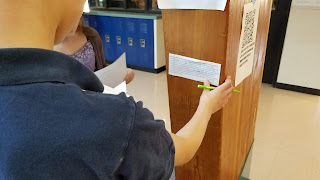

- Make it into a game. Sometimes I have teams compete with each other to be the first to correctly complete the worksheet. For this scramble, I did not do this.
CONCLUSION - To ensure all the students have the correct information, as a class I review the information. Also, I have students share their Thinking Cap Question answer with the class. Sometimes these discussions really get deep into the content and it engages students.
Wednesday, December 12, 2018
The Herringbone Reading Strategy
The Herringbone Reading Strategy
The Herringbone is a graphic organizer that helps students to determine the supportive details and the main idea of an article by requiring them to determine the who, what, when, where, why and how of the article. Students answer each of these questions by filling out a diagram that resembles a herringbone pattern.

WHAT THE STUDENTS READ?
Students were learning about slave life in the United States before the Civil War. The aspect students focused on were five different slave rebellions.
PROCEDURE
Students read five different information texts as it related to slave rebellions. Instead of having all students read all five texts, students read in a think-pair-and-share format. Students were allowed completed the assignment in small groups, no more than two or three students or work independently. Then students completed the Herringbone diagram.
As I introduced the Herringbone Reading Strategy, I explained to the students how important it is to read the entire article first, then answer the questions on the Herringbone worksheet.
Next, the Herringbone worksheet was completed, and students wrote a paragraph summary of the article.
Finally, with the Herringbone worksheet completed, students shared information about their rebellion with another student. I ensured students shared their information with other students who read about a different slave rebellion.
As a closing, students shared with the entire class a short summary of the rebellion they read.
REFLECTION
In the beginning, some students struggled to find answers for parts of the Herringbone worksheet (answering who, what, when, where, why and how). However, it helped students to understand the purpose of the Herringbone once they understood the layering of the questions. First, they answer who the article is about. Then what did the person (or people) do? How did the person (or people) do their task? When did the person (or people) do the action, and so on.
Also, it is imperative for students to know, like writing, close reading is a process too. To read deep takes skill and time. And I do not believe my students understand this. So next time I will present this reading strategy as a process to achieve deeper understanding of the text, rather than an encumbrance step.
MODIFICATION
In the morning classes, I gave the students the Herringbone Reading Strategy worksheet and their reading materials at the same time. But I discovered this was a mistake. Even though I instructed students to read first, THEN complete the questions on the Herringbone worksheet many of the students did not do this. Instead, students completed the Herringbone worksheet AS they read the first time. Even though students completed the assignment sooner, they were skipping the process of re-reading for important information and details. So, later I handed out the reading material first. Once I saw the students complete annotation on their reading, I gave them the Herringbone worksheet to complete. This slowed down the reading process and allowed for deeper understanding of the material.
I was impressed with the student's ability to comprehend the main ideas of their articles since they were written for an older audience. The Herringbone allowed students to slow down and focus on the details, rather than rushing through the reading.
Saturday, December 8, 2018
PIE the Reading Strategy
Strategy #1 - P.I.E.
WHAT IS IT?P.I.E. is a pre-reading strategy that stands for Persuade, Inform or Entertain. This gives students a reason to read - as they read for content, they need to discover what is the purpose of the text. Is it to persuade, inform, or entertain the reader?

WHAT THE STUDENTS READ?
Students read an entire informational page of text about Samuel Slater - the Father of the American Revolution.
PROCEDURE
Before reading, I introduced PIE to the students with an anticipatory question - "What do PIE and reading have in common?" The students discussed in their small groups some possible connections and then they shared with the class some possible answers.
I explained the PIE strategy and we began reading. Also, I reminded students they need to decide if Slater was a traitor and an American hero. So, they had another purpose for reading this assignment.
After we completed the reading, students discussed in their small groups the purpose of the text, then students shared as a class possible answers.
Then, students completed a reading guide over the same text; answer fill-in the black and open-ended questions.
Finally, we checked for understanding and students shared their thoughts about Slater being a traitor or an American hero in small groups.
REFLECTION
The students correctly identified this text as being informational. When asked to justify their answers, some students identified the vocabulary used (neutral) and/or how the author simply presented the information to the students.
As students were walking out of class, I overheard one student say to another that "Today's class was FUN!" To which I wonder, did this strategy really make that much of an impact?
Finally, upon reflection of the kind of text I use in my class (US History), I discovered I use mostly informational text. So, what might happen if I used more persuading texts? Or, better yet, more entertaining texts such as song lyrics, poems, or funny stories in my class? Might this engage students more?
Wednesday, September 5, 2018
Looking for an Engaging Kennedy Resource?
Looking for an engaging Kennedy Resource?
Over the summer I was flipping through my Amazon Prime video account and I discovered an AWESOME video resource for US History Teacher.
 It's a four part series covering the life of President Kennedy. The series is simply entitled JFK, created by PBS for their American Experience series. Each part does an outstanding job going in depth AND being engaging for your students. There are black and white and color home movies of the Kennedys, interviews of people who worked directly with the Kennedys, and relatives who saw historical events first hand. At the same time, it's not glory-be- all John Kennedy. The series is pretty much a fair assessment of his life and the presidency.
Again, this series is on Amazon Prime right now.
Also, if you interested in showing these videos to your class, then feel free to use my movie guides I created for this series. The guides can be found here. Each guide includes fill-in the blank and short answer questions, post viewing questions, and make-up question for absent students who missed the classroom discussions.
Finally, feel free to visit my TpT store for all your other social studies needs. I have it all here!
Take care and have a SUPER year!
James
Over the summer I was flipping through my Amazon Prime video account and I discovered an AWESOME video resource for US History Teacher.

Again, this series is on Amazon Prime right now.
Also, if you interested in showing these videos to your class, then feel free to use my movie guides I created for this series. The guides can be found here. Each guide includes fill-in the blank and short answer questions, post viewing questions, and make-up question for absent students who missed the classroom discussions.
Finally, feel free to visit my TpT store for all your other social studies needs. I have it all here!
Take care and have a SUPER year!
James
Thursday, January 11, 2018
USING MOVIES IN THE CLASSROOM - YES? or NO?

But, for me - I say YES! I see movies in the discipline of History as an excellent opportunity to get engage kids and help them understand the content better. And here's why -
1) Movies bring visuals to ALL those abstract ideas. Kids can see and hear about the working conditions of the textile mills or see how the water frame or the cotton gin works, they will remember it. It also allows them "hang" all that information about the water frame or cotton gin on. Thereby further build their understanding of the subject.
2) Historical movies are engaging. Let's face it, who doesn't like a good movie? Even historical fiction movies underscore important and key concepts. Some historical fiction movie I showed in my US History class are:
- Uncle Tom's Cabin - No better way to drive home those important concepts of slave life before the American Civil War.
- All Quiet on the Western Front - This power story underscores life on the front lines, the loss of innocents, and the waste of war.
- All The Presidents Men - Let's face it, Watergate is very confusing for many students. So many people involved, the twists and turns. But, I used this movie before we learn about the Watergate. It helps students learn the over all scope and give them visuals to understand who the main characters were.
3) Making reference to the movie. When I use a movie in the classroom, I find the kids and myself making references to it so many times. When a student it studying for a test or trying to recall a concept, I woulds day, "Remember when..." and they quickly recall and make the connections from the movie to an academic activity.
Finally, movies can be another important tool for you to use in the classroom. And to help you, please feel free to check out all the movie guides at the Social Studies Super Store website. Click here to get your movie guides.
Saturday, September 30, 2017
DO STATUES TEACH HISTORY?
Do statues teach history?
Over the last few months, Americans have debated the issue of removing statues of Confederate icons from town squares across the United States. Opponents to the removal of these statues claimed a certain perspective of history is being "white washed". They feared future Americans will not understand or learn about an important era in American history.
NO HISTORY BEING TAUGHT
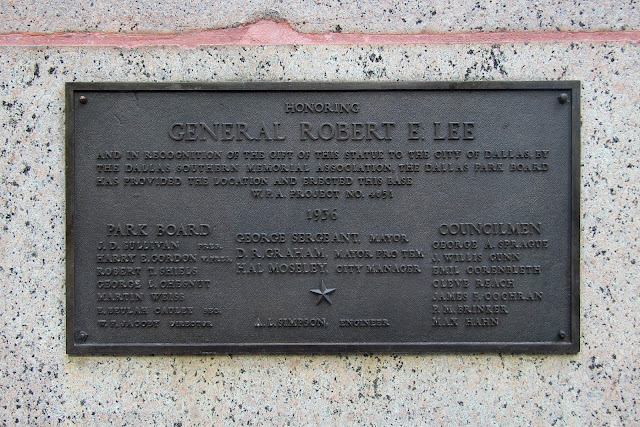
The people who protest the removal of the statutes falsly claim these statues teach American history. In truth, these statues, like most other statues do not teach history. Statues are created and erected to show people from the outside what is important to their communities. This is the reason why Arthuro Di Modica created a 3.5 ton, 18 foot long sculpture of a raging bull and placed it in front of the New York Stock Exchange. There is not plaque explaining the meaning behind this farm animal as it sits in the middle of one of the largest cities in the world. But those who work on Wall Street understand the meaning.
Likewise, most Confederate statues contain nearly no explanation or meaning of the person crafted in bronze. Above was the plaque for a General Robert E Lee statue that was remove from Dallas, Texas. Note the lack of historical information about General Robert E. Lee. It does not explain why Lee was important to Texas, who he was, or even when he lived and died. This is why the teaching occures in the classroom.
WHERE IS THE OUTRAGE?
As a history teacher in the public schools, it bothers me how there's been little or no protest about the slash and burning to cuts in the subjects of history, civics, and social studies across America. In the last twenty years, school district after school district have created an educational apocalypse with huge cuts to the graduation requirments in the area of social studies. Most American students receive only one-half year of American history and one-half year of Government. Gone are the days when students delved into American history when they had one or two years of American history and one full year of US Government. Local school boards and states made cuts in these important subjects to make way for more math or English classes.
When I addressed the slashing of history requirements from two years to one year, my superintendent instructed me to "teach only the important parts of American history". To which I rebutted, I am already teaching only the important parts with two years. This is how "whitewashing" history occurs.
As a classroom teacher I have to cut even more out of my curriculum to fit demands of my school district. But, the annihilation of US history requirements in my small school district was repeated in all states, in many other school districts, large and small across American. The whitewashing of American history occurred before our very eyes, without ANY protest or counter point. No flag waving, chanting for saving our history.
HISTORY IS A UNIQUE SUBJECT
As I have pointed out many times to my principal friends, US History is a very unique subject. Unlike math, English, or literature, the curriculum for US History grows EVERY year. I began teaching history in 1997. Now, think about ALL the historical events that occurred since this year. Bill Clinton was President, Saddam Hussein was the leader in Iraq. The Twin Towers were still part of the New York City skyline, there was no Facebook, smart phones, and the Internet was a neophyte shadow of what it will become. But with all these historical changes, the US History teacher is not allowed any more time to teach their growing curriculum. In fact the opposite has occurred in the United States as social studies requirements are butchered from graduation requirements.
If these some people who are so concern about America's the removal of Confederate statues really care about our past, they should contact their state governments, local school boards and DEMAND young Americans take two years of American History and one year of American government. We all should be concerned about the slow and methodical destruction of American social studies in our public schools.
Over the last few months, Americans have debated the issue of removing statues of Confederate icons from town squares across the United States. Opponents to the removal of these statues claimed a certain perspective of history is being "white washed". They feared future Americans will not understand or learn about an important era in American history.
NO HISTORY BEING TAUGHT

The people who protest the removal of the statutes falsly claim these statues teach American history. In truth, these statues, like most other statues do not teach history. Statues are created and erected to show people from the outside what is important to their communities. This is the reason why Arthuro Di Modica created a 3.5 ton, 18 foot long sculpture of a raging bull and placed it in front of the New York Stock Exchange. There is not plaque explaining the meaning behind this farm animal as it sits in the middle of one of the largest cities in the world. But those who work on Wall Street understand the meaning.
Likewise, most Confederate statues contain nearly no explanation or meaning of the person crafted in bronze. Above was the plaque for a General Robert E Lee statue that was remove from Dallas, Texas. Note the lack of historical information about General Robert E. Lee. It does not explain why Lee was important to Texas, who he was, or even when he lived and died. This is why the teaching occures in the classroom.
WHERE IS THE OUTRAGE?
As a history teacher in the public schools, it bothers me how there's been little or no protest about the slash and burning to cuts in the subjects of history, civics, and social studies across America. In the last twenty years, school district after school district have created an educational apocalypse with huge cuts to the graduation requirments in the area of social studies. Most American students receive only one-half year of American history and one-half year of Government. Gone are the days when students delved into American history when they had one or two years of American history and one full year of US Government. Local school boards and states made cuts in these important subjects to make way for more math or English classes.
When I addressed the slashing of history requirements from two years to one year, my superintendent instructed me to "teach only the important parts of American history". To which I rebutted, I am already teaching only the important parts with two years. This is how "whitewashing" history occurs.
As a classroom teacher I have to cut even more out of my curriculum to fit demands of my school district. But, the annihilation of US history requirements in my small school district was repeated in all states, in many other school districts, large and small across American. The whitewashing of American history occurred before our very eyes, without ANY protest or counter point. No flag waving, chanting for saving our history.
HISTORY IS A UNIQUE SUBJECT
As I have pointed out many times to my principal friends, US History is a very unique subject. Unlike math, English, or literature, the curriculum for US History grows EVERY year. I began teaching history in 1997. Now, think about ALL the historical events that occurred since this year. Bill Clinton was President, Saddam Hussein was the leader in Iraq. The Twin Towers were still part of the New York City skyline, there was no Facebook, smart phones, and the Internet was a neophyte shadow of what it will become. But with all these historical changes, the US History teacher is not allowed any more time to teach their growing curriculum. In fact the opposite has occurred in the United States as social studies requirements are butchered from graduation requirements.
If these some people who are so concern about America's the removal of Confederate statues really care about our past, they should contact their state governments, local school boards and DEMAND young Americans take two years of American History and one year of American government. We all should be concerned about the slow and methodical destruction of American social studies in our public schools.
Subscribe to:
Posts (Atom)