Store Link

Fourth, Fifth, Sixth, Seventh, Eighth, Ninth, Tenth, Eleventh, Twelfth, Homeschooler, Staff - TeachersPayTeachers.com
Showing posts with label Jim Moran. Show all posts

Monday, April 24, 2017

Do the numbers matter? Or is it the process?

My students took the Grit Survey (Growth Mindset Survey) as they usually due every Friday.  The survey asks them many questions about their weekly goals, how often they referred to these goals during the week, what areas these goals were created, and if they achieved their goals.  This week the number of students who achieved their goals dropped.

At first, I am disappointed. But should I be disappointed?

There is much to be read into this data from these weekly surveys.   But let's get back to the REAL meaning of teaching grit and growth mindset.  The point of teaching growth mindset is to have kids think about their goals, understand that if they failed, that they DO NOT allow obstacles to deter their progress.

So, when the number of kids say they did not achieve their goal, should this be interpreted as a negative?  Likewise, if the number of students who achieved their goal, should this be interpreted as a positive?  I am not so sure.

One of the questions I ask my students is how often they think about their goals outside of my class.  17.2 percent of my students do not think about their goals outside of my class.  What if this number decreases?  What if only 10 percent of my students do not think about their goals outside of my class?Would this translate into a higher number of students might achieve their goals?

Results from the latest Growth Mindset survey.  What if the number of students who did not think about their goals dropped to 10 percent?
Isn't it more important for students to think about their goals more outside of class than how many of the students achieved their goals?  To be fair, 29.9 percent of my kids think about their weekly goals outside of my class 5 or more times.  Is this a good number? Should this number be higher?

Now, should I focus on the number of time my kids think about their goals outside of my class?

Boy!  Who knew teaching growth mindset would be SO difficult. :)

Please join me in this process of teaching growth mindset. Leave a comment!


Tuesday, December 8, 2015

CHRISTMAS CLASSROOM BLUES? THIS MIGHT HELP....

As a long time classroom teacher, I know this time of the year is very difficult.  Student are crazed with the snow falling (for those of us in the north), and their minds have already shifted into winter break mode...

So, here is an engaging activity that is fitting for the time of the year: The 1914 Christmas Day truce.
Secondary - WWI CHRISTMAS TRUCE HANDOUT AND TEXT DEPENDENT
 Just think; in the middle of heated a war, two enemies emerged from their trenches to exchange Christmas wishes, treats, and play soccer.  That's what happened on Christmas Day, 1914. 

An incredibly story that grabs students attentions and opens the way for timely discussion about current conflicts in the world.

This timely assignment always grabs the students' attention - the 1914 Christmas Truce from World War One.

This includes a short reading assignment, text dependent questions, and extended internet activities.

You can purchase this lesson right now from my TpT store by clicking on the following link: 1914 Christmas Truce.

Sunday, October 11, 2015

Do you love exit tickets? I do!

I love exit tickets!

Why?  There are quick a way and easy way to check for understanding from my students.  And, then I can reteach the concept, idea as way to review the next day.  This helps to make lessons seamless! So here are a few methods to use this formative assessment.

#1- Simply have the students write their answers on a sheet of paper.  Then with a two minutes remaining have them share their thoughts or ideas with a partner.  As the students walk out the door, collect their answers. 

#2 - Twitter ticket:  Students answer the exit ticket prompt in 140 characters or less.

#3 - Simply simile:  Use a simile to have students demonstrate what they learned you learned today.   If students are struggling I might give an example such as "Imperialism is like an octopus; it causes a nation to be stretch out its' arms and power all over the world."

#4 - Just have them talk.  Have them explain it to their partner what they learned or what they are confused about.  Not all exit tickets need to be formal, sometimes simply have students share their ideas, frustrations, or confusions is great!  While students are talking, I roam around the room listening to their responses.  I do not interpret to correct them if I hear any incorrect information. Why not?  A) I want to see if their partner will correct them.  B)  This gives me an opportunity to review the exercise with the students the next day and review the information.

#5 - Rank it!  I start every lesson with learning targets, so for the student's exit ticket, they will rank what they believed was the most important learning target.  Number one is the highest, and number ten the lowest. Then, the students create a short answer question based upon the highest ranked learning target.  Sometimes the students create some very good questions!
 
Finally, the best part of the exit ticket is the next day.  Reviewing the information with the class.  Getting a quick understanding of their learning, then linking the new lesson with the previous lesson.

Thursday, October 1, 2015

A Call to Arms: Protect History Classes In Our Schools

A Call To Arms: Protect History Classes In Our Schools:

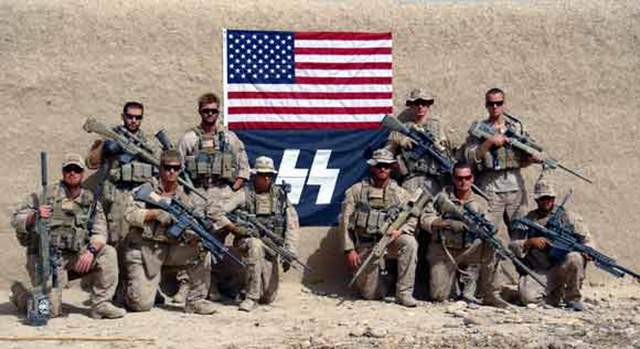
In 2012 Marine Corps scout snipers were seen in a photo standing around a logo identical to the one used by an elite Nazi military unit.  The Marines were the Charlie Company, 1st Reconnaissance Battalion from Camp Pendleton, California.  This Battalion was deployed in Afghanistan when a photo emerged showing the Marines standing in front a blue flag with two large “SS” emblazoned upon it, and an American flag above it.  The shape of the Marines' “SS” was identical to the infamous Nazi Schutzstaffel.


Scout snipers in the Marine Corps shown with a flag bearing an "SS" similar in design to one used in Germany by the SS, a paramlitary force that operated under the Nazi party.  

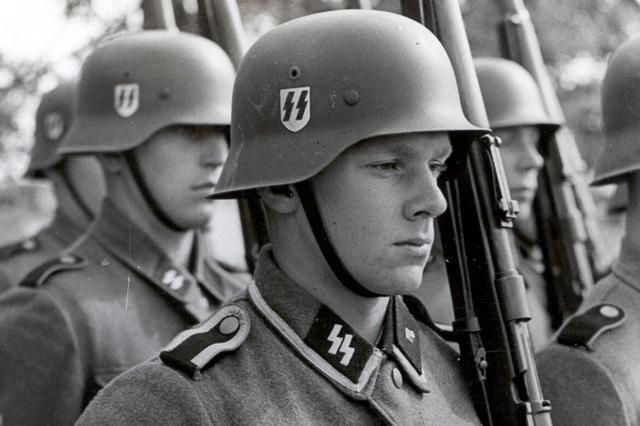
History teaches us the Nazi SS assumed a leading responsibility for security, identification of ethnicity, and control of the concentration camp system.  In short the SS played a key role in the deaths of six million jews and another five million “undesirables” during the Holocaust.
Not only did the SS play an important role in the concentration camps, but members of this unit were very carefully chosen.  SS candidates were required to complete a rigorous selection process where their “racial” ancestry was carefully traced.  Once chosen, an SS soldier was deemed the best German because of their racial heritage.  Also, members of the SS swore an undying loyalty towards Adolf Hitler.

Again, history teaches us how the SS committed other dastardly war crimes during World War II.  Such as impersonating American soldiers during the Battle of Bulge.  During this battle, the SS not only wore American uniforms, but spoke near perfect English, drove confiscated American jeeps, and redirected badly needed supplies and support troops to bogus destinations.  Then after the SS captured Americans soldiers they killed them.  This is what history teaches us about the SS.  The SS were not heroes, but cold blooded, cowardly thugs who killed old women and babies in concentration camps.  Then, breaking the soldiers creed and military codes they killed American POWs in cold blood.  This is what the “SS” truly represents.

Do Marines today really want to compare themselves murderous cowards?  I don’t think so…

In fact a Marine official stated that “We don’t believe these Marine Corps snipers had a historical appreciation for what this symbol meant.”  I agree.  I know many current and former United States Marines, some of my former students are currently serving in the Corps.  I have never questioned their loyalty.  But how did this happen?  Might this be the result of schools across the nation butchering history classes and graduation requirements to almost zero?  I say yes.  Clearly these young Americans did not remember or know their history when the identical “SS” appeared on a blue flag they posed for in their picture.

Secondly, this is not only a blaring example where the lack of historical understanding has proven itself.  But also, history allows us to learn and appreciate from past mistakes and successes others have made.  What worked, and what did not work.  History is what strings our customs and traditions together a nation.  History can, and often does serve as a guide.  After all, if you don’t know where you have been, how do you know where you are going?  

But as a history teacher I am deathly concern for my future Americans.  Will the next generation remember the causes of World War I, or the how our government was sucked into the quagmire known as the Vietnam War?  Will future politicians forget these important lessons because school districts across the nation continue the assault on history?  I do believe this will be true.  

The “SS” flag incident should serve as a warning and urge us to a call to arms.  What will you do to save history in your local school? Will you contact your local school board members tell them the important history plays in the future of America?  Write letters to the editor.  Talk to your neighbors. Let your state leaders know about stories like this can serve as an example of why history is important.

Sunday, September 27, 2015

A Justification For More History in American Schools


A Justification For More History in American Schools

The small high school where I teach cut one year of American History from the district curriculum to make way for another math class.  Before the change students were required to successfully pass two years of American History.   American History A was completed by students in their sophomore year, and American History B was completed by students in their junior year.

Before the change it was perfect in so many ways.  With two years for American history, I had time to explore and teach in-depth of those important American documents such as the Declaration of Independence, and teach all the way to the conflicts in Iraq and Afghanistan.  I had two weeks to teach World War II, with time remaining for teaching the roots of the Vietnam War.  I had time for field trips to area museums and interview local veterans about their time in the service and historic conflicts.  Then, we had time to complete a research paper for the end of the semester, which students then presented to their peers. 

But with the short presentation by the superintendent and a quick vote by the school board, this changed.

Now, I have only one year to cover the same information.  So students do not have field trips, the veteran interviews have been deleted, and no term papers (yes, this broke my students’ hearts).  Now, the opportunity to deeply and richly explore issues and concepts are gone since students’ time has been hacked in half.

When I spoke with the powers that be, it was explained to me how important it was for our students take more math classes.  This, it was hoped, would raise our math scores. Yes, I agree, math is important, but isn’t history also important? 

I was told the school district had to raise the achievement levels in the area of math, and one possible solution to my dilemma might be for me to be more selective in what I teach in history.  In other words, skip entire subjects and teach only the most important subjects or concepts of American History.  This is easier said than done as History, and many other social studies classes have a unique situation; the curriculum continues to grow.

Here’s what I mean.  I started teaching in 1998.  Just think about all that has changed since 1998.  Bill Clinton was President, George Bush was just making sounds about running for president, the idea of having American troops in the Iraq and Afghanistan would sound crazy in 1998, the government was running a surplus in revenue, cell phones were just that, phones without cameras and other computing devices, people still bought their music at stores on CDs, and I kept my grades in a book, not on the computer.  In short, so much has changed in government, civics, society, and history.  But every year more is added to my subject of history.  So, what kind of education might my students receive if I stopped in the year 1998?

So if I had to skip some subject, then I would have to pick.  But there will be some losers and some winners.  And what is important for one year, might be kicked out since something more current and pressing emerges.  For example, during the late 90s, the balance budget amendment was huge news.  The amendment nearly passed the Senate and failed by one vote.  The one senator who did not support it was Senator Hatfield from Oregon – A Republican.  Today, who remember this?  Would this win out compared to the issue of homeland security today?  Also, what I believe is important, another history teacher may not deem as important.  Even with standards, there will be many holes.

Although I am not a math and English teacher, I do not see much changing in these curriculums every four or eights years.  Math intergrades are not voted out of office and the negative number take over.  And students do not need to understand the ramifications of the negative numbers upon the government.  These subjects do not grow exponentially as it does in History or other social studies area.

In short, social studies is unique for many reasons.  But one specific area that it is different is how it changes and more is added to the curriculum every year.  And, to pick and choose will create “holes” in students’ knowledge in the subject.   This is why more time is need in American schools for History and other social studies subject.